Guests quickly form an opinion on the level of cleanliness of the hotel. Stained or smelly bedding can negate any other effort invested in designing the room. The high standards of the hotel industry require more than routine maintenance: textile hygiene prevents the appearance of microbes and allergic reactions in customers.
Thorough cleaning reduces the risk of mite or bacterial infestations. Implementing rigorous protocols becomes necessary even for small family-run hotels that do not benefit from large maintenance departments. Read the lines below and discover some rules on washing bed linen in hotels!
Fundamental steps for correct hotel laundry

Washing hotel linen follows different procedures than those applied at home.
Choose materials suitable for high traffic environments!
The quality of the material used makes the difference with every wash. In professional environments, 100% cotton is the primary choice, being breathable and durable. Damask linen has a fine weave but resists wear very well. Use percale in premium rooms for a cool effect and a soft, long-lasting texture. The synthetic version may seem easier to maintain, but it doesn’t offer the same level of comfort as natural cotton.
Always follow care label instructions and order linens according to fabric specifications. For sophisticated cottons, some products require lower temperatures or detergents specially formulated for delicate fabrics. This step maintains the integrity of the fibers and their fresh appearance.
Set the right temperature and wash cycle!
Contamination by microbes and viruses is fought more effectively at high temperatures. In general, wash at minimum 60°C to eliminate bacteria and mites. However, keep in mind the specificities of each material: some colored or delicate sheets will require a more delicate cycle at 40°C, in which case add a dedicated sanitizing solution.
Sort fabrics by soil category for consistent results every cycle. Also, don’t overload your washing machine – make sure the detergent and water penetrate each item effectively!
Use a professional liquid detergent, such as Omo Professional Active Clean, specially developed for frequent washing and difficult contaminants.
Treat stubborn stains and dirt!
Stains such as blood, sweat or wine should be treated as soon as they appear. Apply a special enzyme-based pre-treatment solution or a mixture of cold water and diluted white vinegar for organic stains. Act locally, using a few minutes of soaking before putting the laundry in the washing machine.
Careful: do not use hot water on blood stains as it sets the stain. Remove stains with cold water and use a disinfectant detergent such as DELLADET Disinfectant Detergent which has sanitizing properties.
For difficult stains or very dirty areas, turn to products intended for professional use, for example Dopomat Xtreme, but always check compatibility with the fabric.
Select the correct cleaner and disinfectant!
The detergent and disinfectant you choose directly affect the effectiveness of your cleaning ritual. In hotels, use concentrated formulas, suitable for textiles, and avoid aggressive substances with chlorine. You can choose an adapted laundry gel, such as Sano Maxima Mix & Wash, which prevents color transfer and can also be used for minimal sorting.
For thorough disinfection, look for hospitality-approved products, such as Konga Hard. They help eliminate dangerous microorganisms, especially when a high level of hygiene is required.
Dry, iron and store in optimal conditions!
Natural air drying prolongs the life of linens, preserves texture and reduces the risk of fading. If space or time doesn’t allow it, opt for an automatic dryer on low or medium heat. Therefore, the fibers do not contract and the material does not acquire a dull appearance.
Professional ironing ensures a pleasant appearance and extra hygiene. Use the right temperature for each type of material. For hotels that cater to a premium segment, the final steam reduces all traces of bacteria and guarantees optimal straightening.
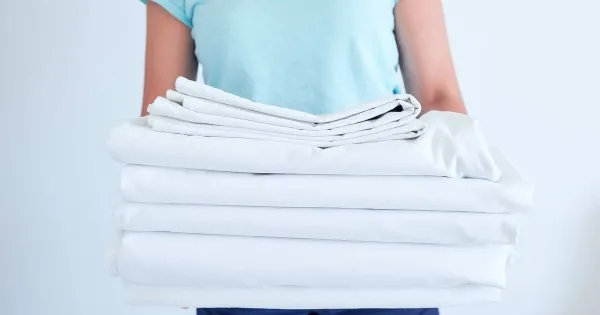
Store clean linens in well-ventilated rooms, away from direct light. Organize them into complete sets for efficiency when changing between guests. Avoid crowding the baskets to avoid damaging the fibres, keeping the linen fresh until next use.
Each hotel can choose to use individual bags to transport clean linen, thus reducing exposure to dust and dirt before use.
Determine the frequency of changing and washing your laundry!
The professional standard requires the change of linen after each customer’s departure. In rooms occupied for a long time, adapt the routine: wash every day or at most every two days.
If you run an apart-hotel or small guesthouse, maintain a strict schedule: any easily observable deviation risks attracting negative reviews and dissatisfaction. In the long run, a clear routine reduces excessive wear on materials, reducing replacement costs.
Avoid common hotel laundry mistakes!
Even experienced staff can make mistakes. The most common include:
- washing at temperatures that are too low (below 40°C), insufficient for sanitization;
- mixing underwear with other fabrics, risking discoloration or damage to the fibers;
- excessive use of conditioner, which reduces breathability and blocks the cleaning ability of the detergent;
- overload the washer, which reduces the efficiency of the cycle and may leave detergent residue.
Recommendations for the maintenance and durability of hotel linen

Careful maintenance extends life. Follow the labels, don’t use aggressive substances on fine fabrics and opt for detergents specifically designed for the hospitality sector. Inspect your linens regularly: When you find signs of wear, stains that won’t come off, or discoloration, remove the item from the cycle immediately.
Try small repairs (seams, hemming) before replacing linens to reduce costs and environmental impact!
Between each use, keep underwear dry, stored properly and changed in time.
Provides a clean and welcoming experience at every check-in, maintaining rigor in the washing and handling processes. Choose Sanito detergents and professional solutions, monitor the evolution of the wear of your linen and train your staff on the mistakes to avoid at every stage of the process!
Sursa photo: Shutterstock
latest posts published

Necessary accessories for a perfectly functioning terrace

Ancient wood sources for authentic projects

Tips for choosing an electric scooter

How do we preserve fruit and vegetables for the winter?

For a cleaner home: choose the most suitable vacuum cleaner!

Special carpets for spaces with heavy traffic

How to install LVT on steps with rounded edges
Design trends for colored rubber flooring
Antibacterial linoleum: safe option for schools and hospitals