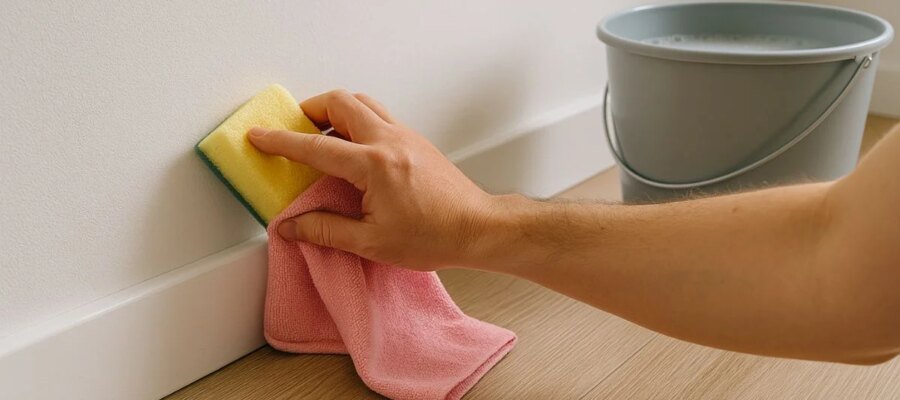
Skirting boards are an essential part of finishing any room. They protect walls, complement the decor and help hide small defects at the base of the walls. However, because they are close to the floor, baseboards accumulate dirt, dust and even shoe marks, which can compromise the aesthetics of the room. Knowing how to clean them properly is essential to keeping them looking new and well cared for. In this guide we’ll explore the best techniques, products and tips for cleaning skirting boards made from different materials, ensuring your space is always spotless.
1. Why is it important to clean skirting boards regularly?
Before delving into cleaning techniques, it is important to understand the importance of keeping baseboards clean:
- Material conservation: Accumulated dirt can cause permanent staining or wear, reducing the life of your baseboard.
- Environmental hygiene: Since baseboards accumulate dust and dirt, keeping them clean helps improve the air quality in the room.
- Aesthetics: Dirty or stained baseboards detract from the overall look of the space, while well-maintained baseboards improve the appearance of the room.
Maintaining regular cleaning of your baseboards is a small effort that makes a big difference in the appearance and conservation of the environment.
2. Identify the baseboard material
The first step to effective cleaning is knowing what material your baseboards are made of. Each type of material requires specific care. Here are the main types of skirting boards and their characteristics:
- MDF: It is one of the most popular materials, but requires special attention as it is sensitive to humidity.
- Madeira: Sophisticated and classic, but prone to scratches and water damage.
- PVC: Practical and resistant to humidity, ideal for environments such as bathrooms and kitchens.
- Porcelain stoneware: Highly durable and easy to clean, widely used in modern projects.
- Polystyrene: Lightweight, moisture resistant and easy to maintain, making it a sustainable option.
Knowing the material of the skirting board is essential for choosing the right cleaning technique and products.
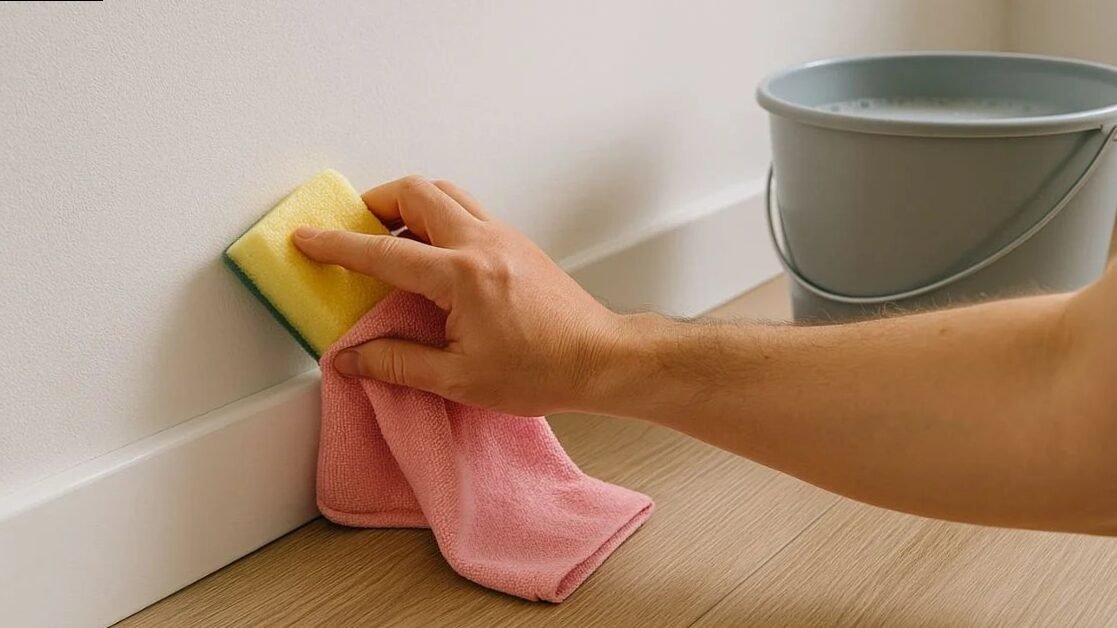
Photo: reproduction
3. Materials and products needed for cleaning
Regardless of the material, some items are essential for cleaning baseboards. Make sure you have available:
- Soft cloth or non-abrasive sponge;
- Bucket with hot water;
- Neutral detergent;
- Soft bristle brush (for more resistant dirt);
- Specific products for wood or porcelain, if necessary;
- White vinegar (optional, for stain removal);
- Flannel or dry cloth for finishing;
- Vacuum cleaner or broom.
With these materials on hand, you’ll be able to clean efficiently without damaging your baseboards.
4. Step by step to clean skirting boards made of different materials
Now that you have identified the material and collected the necessary products, let’s move on step by step to cleaning each type of skirting board.
4.1 MDF skirting boards
- Remove dust: Use a dry cloth or a vacuum cleaner with a brush to remove accumulated dust.
- Wet cleaning: Mix warm water with neutral detergent and clean the skirting board with a slightly damp cloth. Avoid soaking the cloth as MDF is sensitive to moisture.
- Dry immediately: Use a dry cloth to remove excess moisture and prevent the material from swelling or warping.
- For stains: Apply a solution of water and white vinegar to a cloth and rub gently.
4.2 Wooden skirting boards
- Remove dust: Use a duster or dry cloth to clean the surface.
- Clean with specific product: Use a wood cleaner diluted in water, applying it with a soft cloth. Avoid abrasive products that could scratch or damage the finish.
- Hydrate the wood: If necessary, apply specific wax or oil to keep the wood shiny and protected.
- Avoid excessive use of water: Just like MDF, wood can be damaged by moisture.
4.3 PVC skirting boards
- Vacuum or sweep dirt: Start by removing excess dirt with a vacuum cleaner or broom.
- Wash with water and detergent: Since PVC is resistant to moisture, you can wash the skirting boards with a mixture of water and neutral detergent. Use a sponge or cloth.
- Dry well: Use a dry cloth to avoid water stains.
4.4 Porcelain skirting boards
- Remove dust: Use a vacuum cleaner or broom to remove loose dirt.
- Use neutral detergent: Dilute a few drops in warm water and apply with a cloth or sponge. Avoid products that contain acids as they can damage the finish.
- Rinse and dry: Wipe with a damp cloth to remove any detergent residue and finish with a dry cloth.
4.5 Polystyrene plinths
- Basic cleaning: Use a dry cloth or vacuum cleaner to remove dust.
- Wet cleaning: Polystyrene is water resistant, so it can be cleaned with warm water and neutral detergent.
- Dry with flannel: Finish with a dry flannel to leave the baseboard with an even shine.
5. Additional tips to make cleaning easier
- Clean regularly: Weekly cleaning prevents the accumulation of dirt and facilitates maintenance.
- Avoid abrasive products: Materials such as steel wool and acid-containing products can damage baseboards.
- Use skirting board protectors: In high-traffic areas or where furniture is often dragged around, protectors can prevent damage and mess.
- Watch out for stains: Treat stains immediately to prevent them from becoming permanent.
6. How to clean skirting boards after construction or renovation work
During renovations, baseboards can accumulate construction dust, paint spills or concrete. To clean them after work, follow these steps:
- Remove excess dirt: Use a vacuum cleaner to remove loose particles.
- Wet cleaning: Use a sponge with warm water and neutral detergent to remove marks or paint residue. For more stubborn stains, use diluted vinegar.
- Finish with a dry cloth: Make sure the baseboard is completely dry after cleaning.
Conclusion
Keeping skirting boards clean is essential to preserving their appearance and functionality. With the right care it is possible to extend the life of your skirting boards, keeping your environment always beautiful and cared for. The secret is to adapt the cleaning technique to the skirting board material, use the correct products and follow a regular maintenance routine.
For those of you who want to purchase a very high quality skirting board at a very affordable price, you should access the Rodapé Shop website, there are different models of skirting boards, you can make your home very beautiful and much more organized with that sophisticated touch. Check it out here.
Now that you know how to clean different types of baseboards, put these tips into practice and keep your home spotless. So, have you cleaned the baseboards in your house this week?
Frequently asked questions
What is the ideal frequency for cleaning your home’s skirting boards?
The frequency of cleaning skirting boards largely depends on your routine and environmental conditions. In places with little traffic or where dirt does not accumulate easily, such as bedrooms, it is sufficient to clean them every 15 days. In high traffic areas, such as hallways, living rooms and kitchens, it is recommended to clean them weekly. Also, in homes with pets or children, cleaning may be more frequent to avoid the accumulation of hair, dust and stains. Adopting a regular routine not only makes maintenance easier but also reduces the effort needed to remove stubborn dirt.
What mistakes to avoid when cleaning skirting boards made of delicate materials, such as MDF and wood?
Materials such as MDF and wood require specific care to avoid damage during cleaning. One of the biggest mistakes is using too much water, as moisture can cause swelling or warping. Another common mistake is applying abrasive or acidic products, such as bleach, which can damage the finish and leave permanent stains. Very rough sponges should also be avoided because they can scratch the surface. The ideal is to use a cloth slightly dampened with neutral detergent and dry immediately. Furthermore, it is important not to overlook the need to occasionally hydrate the wood with specific oils to maintain its shine and protection.
How to remove tough stains from skirting boards without damaging the material?
To remove difficult stains it is important to use solutions suitable for the type of material. In the case of porcelain stoneware skirting boards, a little white vinegar diluted in warm water helps dissolve dirt or grease stains. For MDF and wood use a mixture of neutral detergent and water and apply with a soft cloth. Always test the product on a small, discreet area before applying it to the entire surface. Soft bristle brushes can also be useful for tougher stains, but they must be used carefully to avoid scratching. After removing the stain, rinse and dry the baseboard completely.
latest posts published

Necessary accessories for a perfectly functioning terrace

Ancient wood sources for authentic projects

Tips for choosing an electric scooter

How do we preserve fruit and vegetables for the winter?

For a cleaner home: choose the most suitable vacuum cleaner!
Special carpets for spaces with heavy traffic
How to install LVT on steps with rounded edges
Design trends for colored rubber flooring
Antibacterial linoleum: safe option for schools and hospitals