
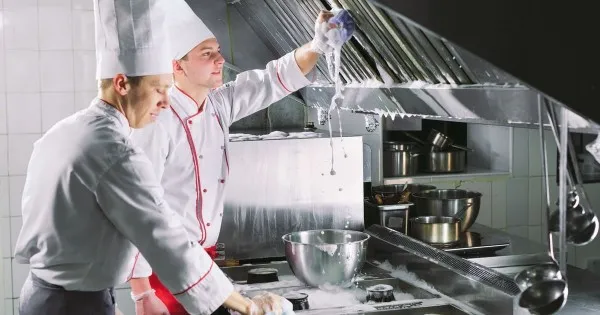
Keeping a stove spotless helps you provide tasty food, avoid accidents and reduce repair costs. In a restaurant, fast pace requires efficient but also safe solutions. A well-organised team, equipped with professional products, manages to keep the stove in perfect condition without blocking activity in the kitchen. Discover in the lines below a practical and easy to follow method for each step!
Space preparation and safety when cleaning stovetops in a restaurant kitchen
Grease build-up builds up on burners, grates and around the hood incredibly flammable. If it is not cleaned constantly, it can catch fire easily. In many restaurants, fires started from improperly cleaned stoves.
It is therefore not just a matter of “turning off the stove a bit”, but of an activity that:
-
prevents accidents,
-
guarantees the quality of the food,
-
AND keep the kitchen functional and legal.
Prepare the space before cleaning
-
Turn off all power sources: turn off the gas or electricity (depending on the type of stove). Check that the surfaces are no longer hot.
-
Allow the stove to cool completely! Do not start cleaning immediately after use, wait for all surfaces to cool to avoid burns.
-
Clear the work area! Remove all plates, pans, pots and ingredients around the stove. Remove grates and burners to clean them separately.
-
Protect surrounding surfaces! Cover the floor and nearby counters with aluminum foil, newspaper or absorbent cloths to prevent grease or detergent splashes.
-
Prepare the necessary equipment: professional degreasing detergent (check if approved for food use); microfibre cloths and sponges (some dedicated to hard surfaces, others soft); protective gloves and possibly a mask (if the cleaning product is strong).
Security measures
-
Wear chemical resistant gloves! Degreasers can irritate the skin or cause chemical burns.
-
Ventilate the room well! If the detergent emits strong fumes, make sure the hood or fans are running.
-
Do not combine cleaning substances! Especially those based on chlorine or ammonia, which can generate toxic gases.
-
Clean in a logical sense! From top to bottom and from clean to dirty, so as not to spread grease and dirt.
-
Check the equipment instructions! Some stoves have delicate components or special surface treatments (stainless steel, enamel, etc.).
Disassembly and cleaning of the removable parts of the stove
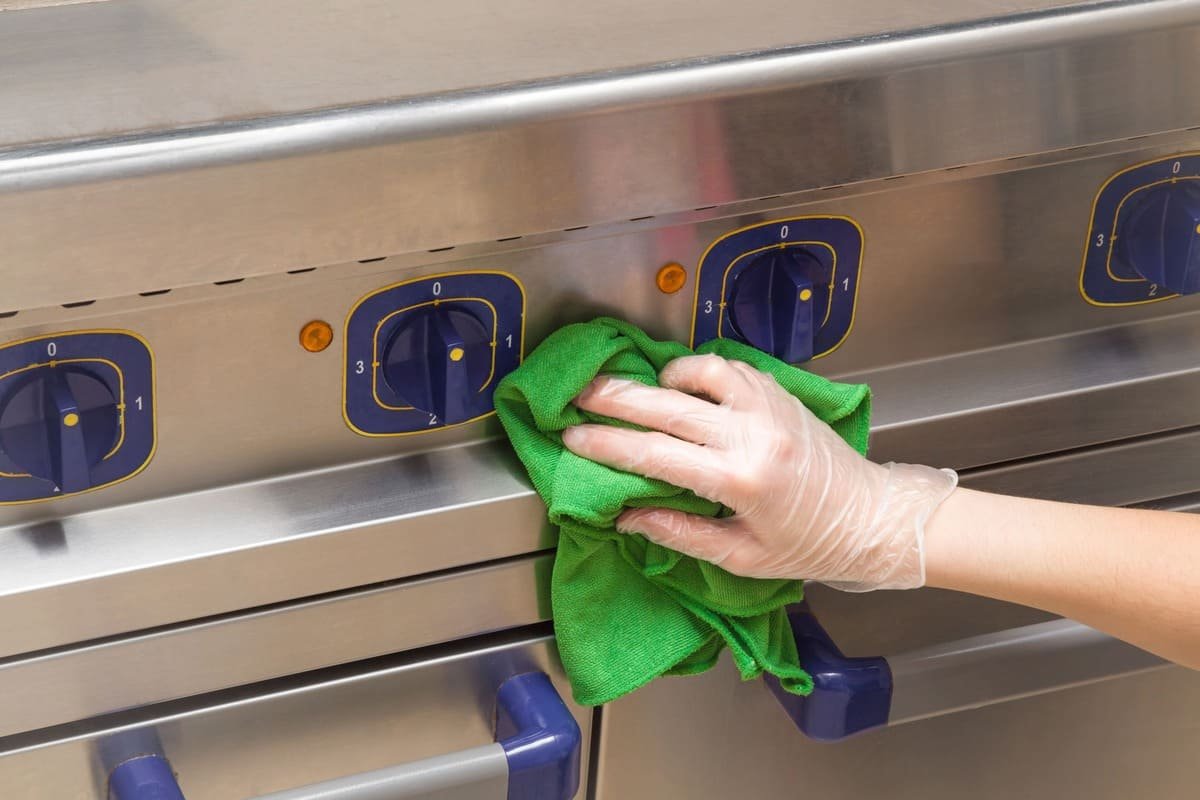
Remove grates, burners and knobs. Immerse them in a basin with warm water and professional degreasing detergent. An effective product in this sense is Sano Forte Plus 1L. For persistent dirt on large components, you can also try Asevi Kitchen Degreaser 5L.
After soaking, clean each piece with a non-abrasive sponge. If necessary, apply a paste composed of bicarbonate and vinegar, wait ten minutes and rub with circular movements. If the stove has stainless steel or enamelled elements, choose a dedicated product such as Stainless Steel Enamel Cleaner 5L, it prevents scratches and maintains the shiny appearance. Dry all parts thoroughly before reassembling them.
Daily cleaning of the hob surface in a restaurant kitchen
What you need:
-
professional degreaser;
-
wet cloth (microfiber or cotton);
-
clean, dry cloth for polishing;
-
protective gloves;
-
abrasive sponge (for areas with deposits);
-
a brush (for corners or flame spreader).
After each use, immediately clean exposed surfaces as follows:
- Turn off the gas or electricity supply (if electric)! Never work on a hot or energized stove. Wait for it to cool completely.
- Remove all grates and burner covers! Place them in a container with hot water + a little degreaser to soften the grease. If you have an oven rack on top, also remove the pans of soaking fat.
- Spray the degreaser on the surface of the stove! Apply to the entire surface: around the burners, on the sides, behind the control panel! Let it work 1–3 minutesaccording to the product instructions (but do not allow to dry). Choose a rapid degreaser that does not require heating, for example the Sano Dg Forte 4L degreasing detergent or the GRILL Express detergent, for hoods and stoves, 5L.
- Clean with a damp cloth or sponge! Use circular motions and focus on areas with hardened fat. For corners or large deposits use the brush or the abrasive side of the sponge! Don’t forget to delete too adjustment knobs/finswhere dirt accumulates.
- Rinse surfaces with a clean, damp cloth! Nou leave traces of detergent (especially around the burners or the control panel).
- Dry with a clean, dry cloth! Helps prevent stains and restores the shine of stainless steel. If you want a perfect look you can use a microfiber cloth to polish.
- Clean the grills separately and dry them well! Remove them from the solution, clean them with a sponge and a brush! Rinse, dry and reassemble.
- Check out the functionality at the end! Once everything is clean and dry you can restore the gas or electricity supply. Test one or two burners to make sure they work well.
Monthly disinfection and hygiene maintenance
At least once a month disinfect the hob with a product compatible with professional kitchens. You can find the full range of these products on kitchen detergents. Apply the disinfectant to the clean surface, respect the recommended action time and rinse well. This step reduces the risk of food contamination and maintains the hygiene standard required by food safety regulations.
Practical advice and useful tricks for obtaining excellent results when cleaning stoves in a professional kitchen
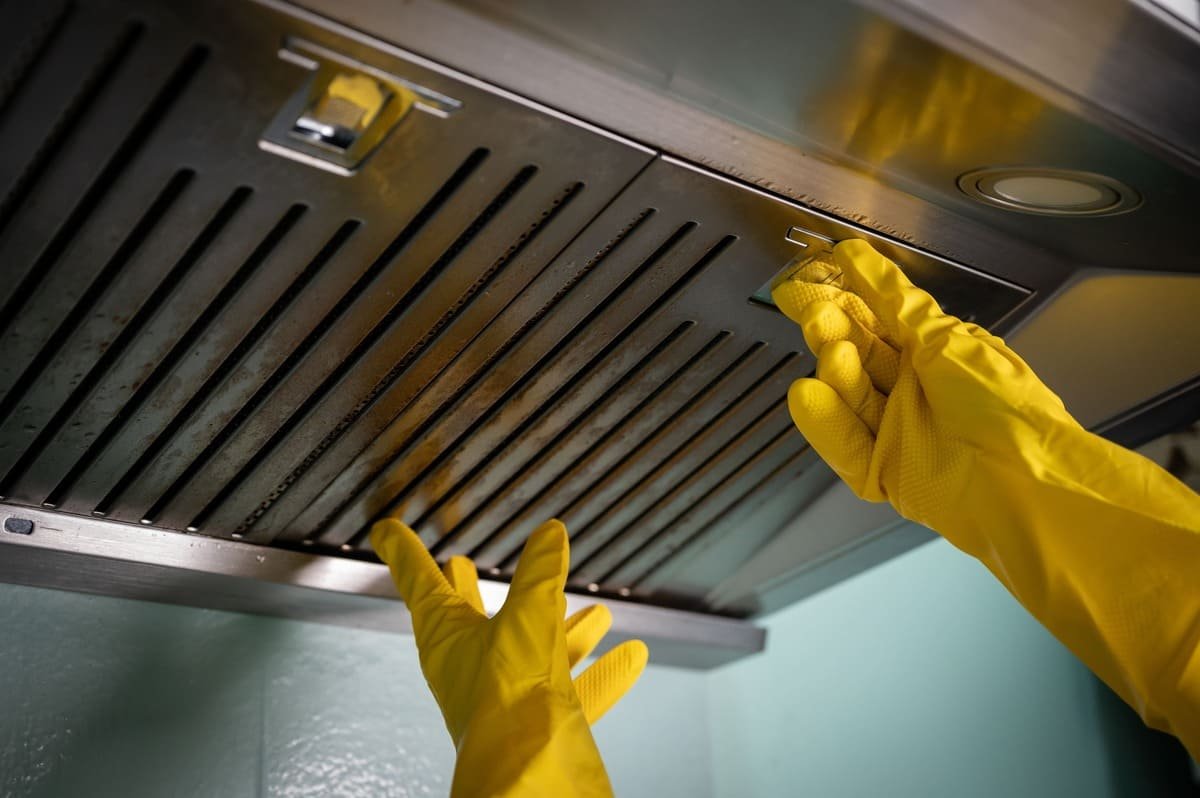
- Avoid using abrasive sponges on stainless steel or glass. They can permanently scratch surfaces and make them more difficult to clean later.
- After each wash, use professional cloths to completely dry the stove. This little detail prevents stains and keeps the look clean.
- Don’t try to quickly clean with excess water, especially in the button area: you may cause electrical problems.
- Periodically test new products and compare the results. For example, you can alternate classic degreasers with concentrated or heat-free ones to find out which one makes your team’s work more efficient.
Set a clear cleaning plan for the team with daily, weekly and monthly tasks. Shares responsibilities and monitors performance. For example, one colleague can take care of the daily quick cleaning, another the weekly disassembly and inspection, and once a month the complete disinfection takes place.
Modify and adapt the plan based on the workload or the type of dishes found daily. Good organization reduces the risk of forgetting some operations and helps prevent unpleasant surprises when cooking.
Sursa photo: Shutterstock
latest posts published

Necessary accessories for a perfectly functioning terrace

Ancient wood sources for authentic projects

Tips for choosing an electric scooter

How do we preserve fruit and vegetables for the winter?

For a cleaner home: choose the most suitable vacuum cleaner!

Special carpets for spaces with heavy traffic

How to install LVT on steps with rounded edges

Design trends for colored rubber flooring

Antibacterial linoleum: safe option for schools and hospitals