

Unpleasant odors or traces of mold emanating from the drum indicate a critical accumulation of residues which directly compromises the freshness of your professional linen. A rigorous intervention to clean your washing machine allows you to dissolve stubborn limescale and eradicate invisible bacterial sources that silently limit washing performance. This technical guide details proven disinfection protocols and preventative maintenance routines they guarantee impeccable cleaning ensuring the longevity of your equipment.
Deep cleaning of your car
The reactor core: cleaning the drum
The drum is the first source of bacteria and limescale. Low temperature cycles, although economical, encourage this insidious problem. This inevitably leads to a risk of bad odors on the linen.
To effectively clean your washing machine, the high temperature (90°C) vacuum cycle is essential. Done once or twice a month dissolves stubborn residues and eradicates germs. This is an essential preventative action.
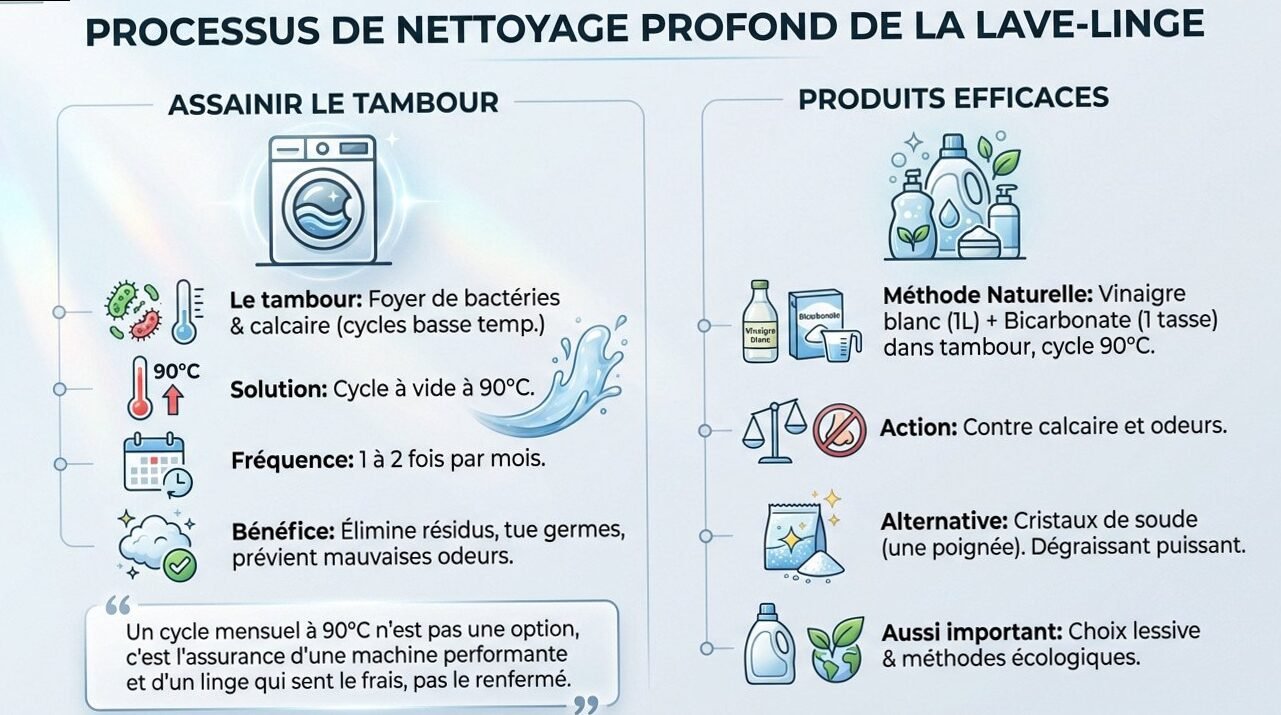
A monthly cycle at 90°C is not an option, it is the guarantee of a high-performance machine and laundry that smells fresh, not musty.
Descaling and disinfection: products that work
The most effective natural method combines white vinegar and baking soda. Pour a liter of vinegar and a cup of bicarbonate of soda, then start the cycle at 90°C. This combination results formidable against limescale and odors.
Soda crystals are a powerful alternative. A simple handful thrown into the drum is enough. It’s a excellent degreaserparticularly useful for maintaining hygiene in a demanding professional context.
The choice of detergent and the use of ecological cleaning methods are also important factors not to be overlooked.
Forgotten areas: a surgical interview
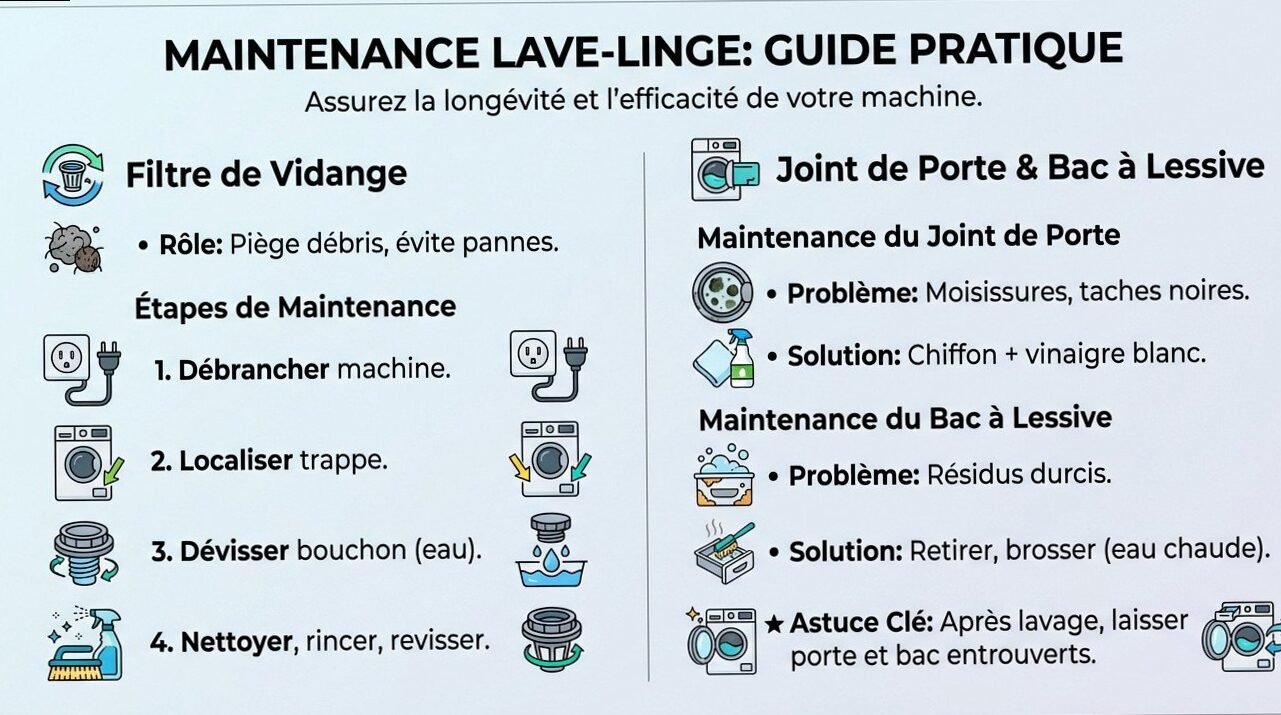
The exhaust filter, guardian of your machine
This component captures stray fibers and objects that threaten the drain pump. To clean the washing machine without risk, this technical check remains essential. A clogged filter paralyzes evacuation and causes serious mechanical failures.
-
- Unplug the machine e Protect the area with an absorbent rag.
-
- Locate the access hatchgenerally hidden at the bottom of the front facade.
-
- Gradually unscrew the cap drain the residual water without flooding the ground.
-
- Remove the filter, remove residue and rinse it before putting it away. screw firmly again.
Door and linen drawer seal: mold nests
The door seal retains moisture and quickly becomes a breeding ground for microscopic fungi. Unsightly black marks end up soiling clean linens during unloading. However, this insidious worsening remains avoidable on a daily basis. A simple wipe with white vinegar is enough to sanitize the surface.
The detergent drawer suffers the same fate when the powders fossilize there. These clusters block the arrival of products and favor bacterial proliferation. Remove the drawer to brush vigorously with warm water and soap.
After each wash, leave the door and detergent drawer ajar. It is a simple gesture that frees the carpet from humidity and mold.
Changing gear: prevention and good practices
Plan to last: Your maintenance schedule
One-time maintenance is not enough, you need to establish a strict routine to avoid unexpected failures. There regularity remains the only key to clean your washing machine efficiently and sustainably.
| Frequency | Maintenance action | Objective |
|---|---|---|
| After each cycle | Leave the door open | Prevent moisture and mold |
| Every month | Drying cycle at 90°C with vinegar | Disinfect and descale the drum |
| Every quarter | Cleaning the exhaust filter | Avoid blockages and failures |
| Twice a year | Checking the drain hose | Ensure good water flow |
Mistakes to avoid to preserve your equipment
You think you’re doing the right thing by filling the drum to the brim, but overloading the drum silently destroys the bearings. The laundry comes out poorly washed. What’s worse, too much detergent clogs the internal circuits. These residues create costly and completely avoidable failures.
Empty your pockets systematically, because a simple coin can break the drain filter or puncture the tank. For stubborn stains, targeted application of a fabric stain remover is much safer than overdosing. Finally, always choose a perfectly dosed professional detergent ensure the longevity of your equipment.
Adopting a rigorous maintenance routine ensures the durability of your equipment while ensuring impeccable textile hygiene. These precise gestures, transforming the technical interview into true performance leverit will preserve your investment in the long term. A perfectly healthy machine will therefore remain the absolute guarantee of linen full of freshness and purity.
Frequently asked questions
How can I deep clean my washing machine?
AND Complete sanitization requires a methodical approach targeting every critical component of the device. You should start with a high temperature vacuum cycle, ideally 90°C, to dissolve detergent residues and eliminate bacteria deposited in the tank. At the same time, manual cleaning of the goods drawer, door seal and exhaust filter is essential to ensure impeccable hygiene and restore the machine’s initial performance.
What is the ideal procedure for cleaning an empty washing machine?
Performing a high temperature vacuum cycle is an essential maneuver for the longevity of the equipment. This operation, to be carried out once or twice a month, allows very hot water to circulate in all corners of the drum and tubes without being blocked by laundry, thus dissolving accumulated dirt. For greater efficiency, adding a liter of white vinegar directly into the drum before starting the cycle will help descale and disinfect the entire plumbing system.
Is there any effective traditional advice for machine maintenance?
The combination of white vinegar and baking soda remains a formidable solution against limescale and bacteriaoften superior to harsh chemicals. Pouring a liter of vinegar and a cup of baking soda into the drum causes an effervescent reaction that dissolves dirt, while soda crystals offer a powerful alternative for degreasing very dirty machines. These ecological methods guarantee material-friendly maintenance while being economically advantageous.
How to eliminate persistent bad odors from a dirty washing machine?
Unpleasant odors often indicate the presence of mold or bacteria that proliferate in the residual humidity of the joints or the tank. To remedy this, it is necessary to carefully clean the door seal with a vinegar solution, followed by a wash cycle at 90°C with the addition of bicarbonate to neutralize acidity and odors. It is also essential to leave the door and detergent drawer ajar after each use allow natural ventilation and dry.
Is the use of white vinegar recommended for washing machine maintenance?
Absolutely, this acidic liquid acts as a powerful natural descalercapable of dissolving mineral deposits without damaging internal components when used correctly. Its antibacterial action sanitizes the inside of the machine and prevents the appearance of bad odors, advantageously replacing the fabric softener during rinse cycles. However, it should never be mixed with bleach, as this combination produces dangerous toxic fumes.
Which products to choose to ensure optimal cleaning of the machine?
For regular and ecological maintenance, white vinegar, sodium bicarbonate and sodium crystals offer spectacular results on encrustations and greasy residues. For more thorough disinfection, bleach can be used sparingly during a vacuum cycle, although repeated use may weaken some rubber seals. The choice must therefore be oriented delicate solutions for weekly maintenance and more intensive treatments for quarterly cleaning.
How to effectively maintain the evacuation system and filters?
The exhaust filter, the true guardian of the pump, requires a quarterly inspection to remove fibers, coins and other intruding objects that could hinder evacuation. After draining the residual water through the small tube often provided for this purpose, simply unscrew the filter, rinse it with clean water and check that no debris is blocking the pump propeller, thus ensuring smooth and silent emptying.
And you, do you already follow a regular maintenance routine for your washing machine? Share your practices, questions or feedback in the comments!
Share this article on your favorite social networks:
latest posts published

Necessary accessories for a perfectly functioning terrace

Ancient wood sources for authentic projects
Tips for choosing an electric scooter

How do we preserve fruit and vegetables for the winter?

For a cleaner home: choose the most suitable vacuum cleaner!

Special carpets for spaces with heavy traffic

How to install LVT on steps with rounded edges
Design trends for colored rubber flooring

Antibacterial linoleum: safe option for schools and hospitals