
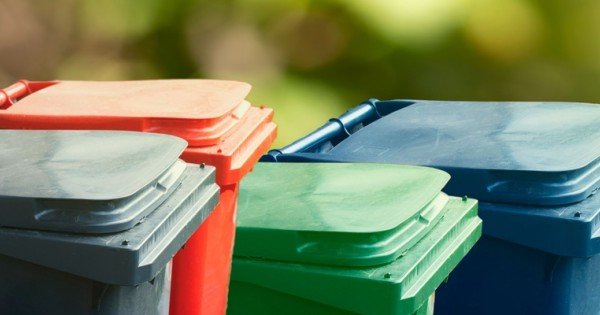
Although each of us can contribute to protecting the environment through simple gestures, such as separate waste collection or reducing plastic consumption, businesses have the power to have a real, visible and sustainable impact.
Whether we are talking about offices, commercial spaces, HoReCa units, industrial buildings or public institutions, they all generate significant quantities of waste. The way this waste is managed reflects the organisation’s responsibility towards the environment and its values towards customers, employees and authorities.
Why is recycling a corporate responsibility in 2025?
In 2025, sustainability is a standard expected by authorities, customers and employees. AND recycling it is one of the most visible and easy-to-implement ways a company can demonstrate its commitment to the environment.
The impact of waste on the environment… and on the brand
In an economic and social climate marked by the climate crisis, excess plastic and urban pollution, the way companies manage waste directly affects their reputation. Lack of recycling measures or non-compliance with separate waste collection are no longer tolerated by business partners or customers. On the contrary, companies that implement clear, transparent and visible environmental policies differentiate themselves as responsible and reliable. Discover how to properly collect waste for recycling!
Increasingly stricter rules imposed by the EU
The European Union currently imposes ambitious targets on recycling and waste reduction:
-
by 2030, at least 65% of municipal waste must be recycled; [1]
-
separate waste collection by fractions is mandatory for all companiesregardless of the field;
-
the lack of collection infrastructure can attract fines and loss of public contracts.
So recycling is no longer just an ethical practice: it is a legal condition and eligibility criterion in B2B collaborations.
The role of companies in shaping collective behavior
Businesses, especially those with a large number of employees or with premises accessible to the public, play a key role in the indirect education of the community.
Employees learn by example and customers notice and appreciate the care for the environment. The implementation of clear collection systems is not only an internal organizational measure, but also an external signal of responsibility.
Here’s why equip work spaces, waiting areas, exteriors or common areas with well-marked waste containers, dedicated containers or separate Eurocontainers it is a logical and necessary first step towards sustainability. It’s about create an ecosystem in which recycling becomes a reflex, not an obligation.
The first step: separate waste collection in the office, public or industrial spaces

Implementing an effective recycling strategy starts with the most important element: selective collection. It is the first point of contact between humans and the waste management system.
How is separate waste collection organized based on the space and type of waste?
For recycling to work, it has to be accessible, clear and constant. And this means having an infrastructure designed for types of materials:
-
Plastic and metal – collected together in many local systems
-
Paper and cardboard – easily contaminated if not separated correctly
-
Glass – requires sturdy and well-sealed containers
-
Residual waste – everything that is not recycled, but must be collected hygienically
In industrial or public spaces, this process must be scalable, from single baskets to large containers or Europub.
Intuitive visual bins and systems: the key to true engagement
One of the biggest obstacles to waste separation is confusion. Unclear labels, wrong colours, lack of containers can sabotage the initiative.
This is why it is essential to use clearly marked recycling containersin standard colors (yellow, blue, green, etc.), with visible icons and texts.
-
In the offices: indoor waste bins with double or triple lids they are ideal for compact spaces
-
In open spaces or with heavy traffic: external containers or road containers with materials resistant to atmospheric agents
-
In warehouses or industrial units: Eurocontainers and mobile containers for high volume and easy handling
Placement is as important as the container. Containers should be placed where waste is found: near printers, in kitchens, at exits, in waiting areas or in courtyards.
Examples of infrastructure suitable for different spaces:
| Type of space | Recommended solution |
|---|---|
| Open-space offices | Compact and modular containers for separate waste collection |
| Commercial buildings | Outdoor containers with visual signs |
| Pedestrian areas/parks | Robust road containers, difficult to vandalize |
| Industrial Hale | Eurocontainers and mobile containers |
| Schools/hospitals | Clearly labeled bins, quickly sanitized |
Intelligent design of collection spaces: aesthetics and functionality
Effective recycling depends a lot on goodwill, but it also matters the quality and design of the collection containers. In a commercial space, be it an office, a showroom, a restaurant or a factory, garbage bins must simultaneously meet three criteria: to be functional, resistant and visually integrated into the environment.
Choosing the right material for garbage cans
-
Stainless steel it is ideal for high-traffic indoor environments where aesthetics count (reception, conference rooms). Stainless steel dustbins they are elegant, resistant and easy to clean.
-
Durable plastic it is more suitable for informal spaces, open-plan offices, canteens or technical areas. Plastic rubbish bins they are lightweight and available in a variety of standardized colors for recycling.
-
Painted metal offers a solid alternative for outdoor or public areas such as parks, schools, institutions.
The lid, the pedal or the ashtray? Details that influence recycling behavior
-
colored and selectively opening lids helps prevent contamination of fractions
-
pedals reduce direct contact with surfaces: ideal for medical spaces, HoReCa or sanitized offices
-
rubbish bins with integrated ashtrays they are useful in smoking areas, reducing the risk of fires and keeping the space clean
Checklist – How to organize the efficient placement of recycling containers
✔️ Each activity area has dedicated containers (office, kitchen, warehouse, outdoor).
✔️ The bins are visibly labeled, in standard colors (yellow – plastic, blue – paper, etc.).
✔️ They are positioned at a maximum distance of 10 meters from waste production areas.
✔️ They are accessible to all users, including people with disabilities.
✔️ The outdoor baskets are anchored.
✔️They are used saci director compatible with the type of waste (resistance, volume, impermeability).
✔️ The system is checked and cleaned periodically and the staff is trained on correct separation.
Public spaces, parks, terraces: separate waste collection in high traffic areas

In areas with a high flow of people, such as parks, shopping streets, terraces, markets or car parks, recycling becomes an operational challenge. Here user behavior is more unpredictable and waste is more varied: disposable packaging, bottles, food scraps, cigarette butts, etc.
For recycling to be possible in these spaces, it is necessary solid, visible and externally adapted infrastructure.
Specific challenges and how to solve them:
High traffic = high volume of waste
-
The solution: baskets with extended capacitybin or Eurocontainer type, equipped with resistant bags and an easy emptying system.
Variable weather
-
The solution: Weatherproof outdoor trash cansMade of durable materials (painted metal, thick plastic, stainless steel).
Hurried or inattentive users
-
The solution: intuitive design: colored containers with large icons and visible opening;
-
Furthermore, street rubbish bins must be localized in transition zones: near the banks, at the entrances/exits of the park, near the refreshment areas.
Smoking in semi-public areas
Cleaning bags suitable for efficient waste management
No matter how good the containers or bins used, the collection system cannot function effectively without one key, often overlooked element: the cleaning bag.
In commercial premises the bags must be chosen based on the volume, type of waste and emptying speed. The wrong choice can lead to:
-
torn bags and mess in the work area
-
unpleasant odors and chimney contamination
-
extra effort for cleaners
Therefore, not all black garbage bags are created equal. Here’s what you need to keep an eye on as a business:
High mechanical resistance (thickness expressed in microns)
-
For light waste (paper, plastic): bags 20–40 microns;
-
For household waste: bags 50–70 microns;
-
For heavy or sharp waste (glass, metal, packaging waste): further 80 microns.
Choose bags from low density polyethylene (LDPE); they are more flexible and more difficult to puncture.
Volume adapted to the container
Use bags that corresponds exactly to the volume of the bin or containerneither too loose nor too narrow.
| Basket capacity | Recommended bag volume |
|---|---|
| Small table bin (10-15 L) | 20-30 liter bags |
| Standard bin (30–50 L) | 60–80 liter bags |
| Large container (120–240 L) | Bags 120–240 L (with fold) |
| Eurocontainer (660–1100 L) | Rolled industrial bags |
Color and visual coding for recycling
To facilitate separate waste collection, use colored bags depending on the type of waste:
-
Yellow – plastic and metal
-
Blue – paper and cardboard
-
Green – glass
-
Black or grey – residual waste
-
Transparent – useful for visual inspection in industrial environments or warehouses
The integration of these codes in collective spaces (offices, canteens, public areas) significantly reduces the rate of contamination of the recyclable fractions.
Special features for professional environments
-
bags with closing ribbon (sleeve type) – ideal for HoReCa spaces or healthcare areas;
-
antibacterial cleaning bags – recommended for hospitals, clinics, treatment centers. For infectious waste, opt for biohazard waste bags;
-
biodegradable or compostable bags – suitable for companies pursuing environmental certifications (e.g. LEED, ISO 14001);
-
rolled bags – easier to store and distribute, ideal for companies with multiple collection points.
If you’re ready to take a real step towards sustainability, choose the professional rubbish bins available on Sanito.ro. You can find solutions for all types of spaces, from elegant offices to parks, lounges or restaurants, designed for durability, efficiency and functional design.
source
[1] “Resource efficiency and circular economy | Factsheets on the European Union | European Parliament.” Europa.eu31 March 2025, www.europarl.europa.eu/factsheets/ro/sheet/76/utilizarea-eficienta-a-resurselor-si-economia-circulara. Accessed August 4, 2025.Sursa photo: Shutterstock
latest posts published

Necessary accessories for a perfectly functioning terrace

Ancient wood sources for authentic projects
Tips for choosing an electric scooter

How do we preserve fruit and vegetables for the winter?

For a cleaner home: choose the most suitable vacuum cleaner!

Special carpets for spaces with heavy traffic

How to install LVT on steps with rounded edges

Design trends for colored rubber flooring

Antibacterial linoleum: safe option for schools and hospitals