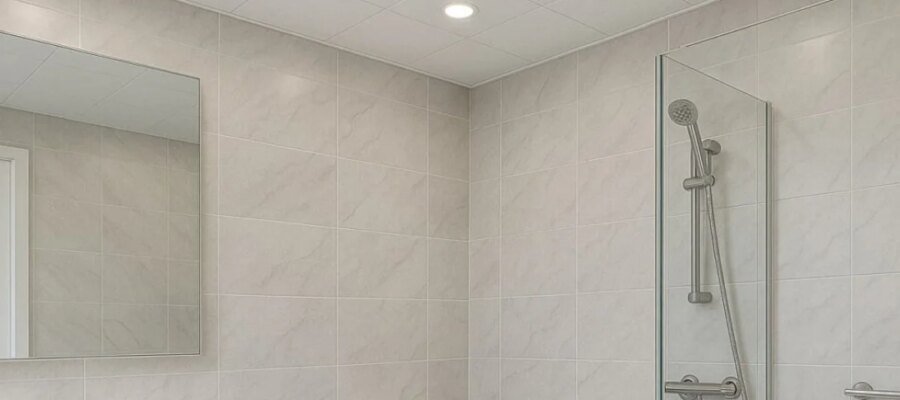
Choosing the best false ceiling for the bathroom is a decision that directly affects the durability of the finish, the maintenance of the space and the final appearance of the room. Bathrooms are environments with high levels of humidity, constant steam and the possibility of splashes, so the cladding must be durable, easy to clean and installed correctly to avoid problems such as mould, warping or the need for frequent repairs.
Because in bathrooms the choice of covering is important
The importance of choosing the bathroom covering correctly begins with the behavior of the environment itself: the steam from the shower and the humidity of the air cause unsuitable materials to absorb water, become deformed, moldy or create permanent stains. In addition to the visual aspect, the ceiling has a structural and aesthetic function: it can hide pipes and wiring, integrate lighting and improve acoustic comfort, if well chosen. The durability of the coating also directly affects the total cost of the work: opting for a moisture-resistant material avoids replacing the coating after years, reduces rework and reduces maintenance costs. Therefore, thinking about resistance, ease of cleaning, compatibility with lighting and wiring, as well as the desired finish, makes the choice of the false ceiling a decision that must consider the use, ventilation and style of the bathroom.
Main options and their characteristics
There are some recurring options when it comes to bathroom cladding. The most used are PVC cladding, gypsum cladding (plasterboard), plaster treated or laminated with PVC and cement panels in specific situations. Each alternative has advantages and limitations that must be considered based on the profile of the environment.
- PVC siding is often recommended for its direct resistance to moisture. Because PVC does not absorb water, it does not warp or create easy conditions for mold and mildew, and is easy to clean with a damp cloth. It is also lightweight and quick to install, which reduces construction time, and there are several models, including a model that imitates wood, for those looking for a cozier look.
- Plaster cladding (drywall) offers a smoother, more sophisticated finish, with broad aesthetic possibilities – it is ideal for projects seeking a refined look or integration with moldings and recessed lighting. Ordinary plasterboard, however, is sensitive to humidity; In bathrooms without good ventilation or heavily exposed to steam, plain plaster can absorb water and deteriorate over time. PVC protection, being a great alternative when you want the look of plaster without losing the resistance needed for a bathroom.
- Cement panels are very resistant to humidity and mechanical wear, which is why they are used in situations where a sturdy base is needed. However, they are heavier and require an adequate support structure; Furthermore, their finish tends to be less decorative, often requiring another coating or specific paint to be aesthetically ready.
- Other alternatives, such as fiberglass, acrylic, or metal (aluminum, steel) panels, may be used depending on the style of the project. Metal panels offer strength and a modern or industrial look, while fiberglass and acrylic ensure lightness and ease of maintenance.
Comparison between PVC and plaster: practical points to decide
In practice, the decision is usually narrowed between PVC and plaster (or laminated plaster). To choose, analyze four main points: resistance to humidity, aesthetic finish, ease of installation/maintenance and cost-benefit ratio. PVC is unbeatable in moisture resistance, easy to clean and convenient for installation. Plaster, on the other hand, offers a sophisticated finish, greater flexibility for moldings and lighting details, and in some cases better sound insulation, but common plaster requires caution with humidity; Therefore, in bathrooms without adequate ventilation, PVC laminated plaster is an intermediate solution that combines aesthetics and protection.
Installation and essential care
Regardless of the material chosen, some attention in installation and maintenance prolongs the useful life of the ceiling. Ventilation of the environment is essential: an extractor or a window that allows air exchange reduces the formation of condensation and prevents the accumulation of steam. Before installation, check the electrical and lighting points: planning the accesses and rulers for the luminaires avoids subsequent cuts in the ceiling. To clean PVC and laminate surfaces, a damp cloth is sufficient; Cleaning the plaster must be carried out with products that do not remove the paint and do not damage the finish. Carry out regular checks for stains, deformations or leaks and correct them immediately, as small defects prevent larger problems. Choosing paints or finishes suitable for humid environments, in the case of plasters, is another important measure to ensure longevity.
Practical advantages for those who purchase on Rodapé Shop
We at Rodapé Shop know that the choice of covering is part of a larger finishing project that involves skirting boards, moldings and other elements. Therefore, our recommendations prioritize solutions that preserve investments and avoid rework. A well-chosen false ceiling enhances the property, reduces the need for maintenance and guarantees a harmonious appearance with the rest of the finishes. For customers who want convenience and durability, PVC and laminate options are often best; For those looking for a sophisticated finish capable of ensuring good ventilation, plaster may be the ideal choice. On the Rodapé Shop blog you will find articles that help you match ceilings with skirting boards and other finishing elements, offering practical guidance for those who are renovating or building.
How to evaluate the best cost-benefit ratio for your case
Evaluating the cost-benefit ratio involves considering the initial price, expected lifespan and maintenance costs. Cheaper materials that require frequent renovation or repainting may be more expensive in the medium term. PVC, for example, tends to stand out for its low maintenance costs and good durability in humid environments, which often represents savings over the years.

Objective conclusion
Defining the best bathroom ceiling depends on the profile of the space and the priorities of the project. If moisture resistance and ease of maintenance are your goal, PVC is the practical and reliable choice. If the goal is a more refined finish and the bathroom has good ventilation, plaster or plaster laminated with PVC can combine aesthetics and functionality. For situations requiring structural strength, consider concrete pads. The ideal decision arises from the analysis of use, ventilation, desired aesthetics and available budget. To explore products and ideas suited to your project, visit the Rodapé Shop blog and take a look at our shop.
Frequently Asked Questions (FAQ)
Is PVC always the best choice for the bathroom?
PVC is the most practical option when the main criteria are moisture resistance and ease of cleaning. In bathrooms with a lot of condensation or without adequate ventilation, PVC is often the safest choice. However, if you prioritize a specific aesthetic finish and have efficient ventilation, you may want to consider other alternatives, such as laminate plaster.
Can I use regular plaster on the bathroom ceiling?
It is possible, but it is not the most suitable option for bathrooms with high humidity. Regular plaster can absorb vapor and deteriorate over time. If you choose plaster, choose special damp-proof sheets or plaster laminated with PVC to ensure greater durability.
How to avoid mold and stains on bathroom coverings?
Maintain good ventilation (exhaust fan or window), clean the ceiling regularly with a damp cloth and suitable products, choose materials resistant to humidity when possible and carry out periodic inspections to quickly correct any signs of infiltration or deformations. These simple measures prolong the life of the covering and preserve its finish.
latest posts published

Necessary accessories for a perfectly functioning terrace

Ancient wood sources for authentic projects
Tips for choosing an electric scooter

How do we preserve fruit and vegetables for the winter?
For a cleaner home: choose the most suitable vacuum cleaner!
Special carpets for spaces with heavy traffic
How to install LVT on steps with rounded edges
Design trends for colored rubber flooring
Antibacterial linoleum: safe option for schools and hospitals